
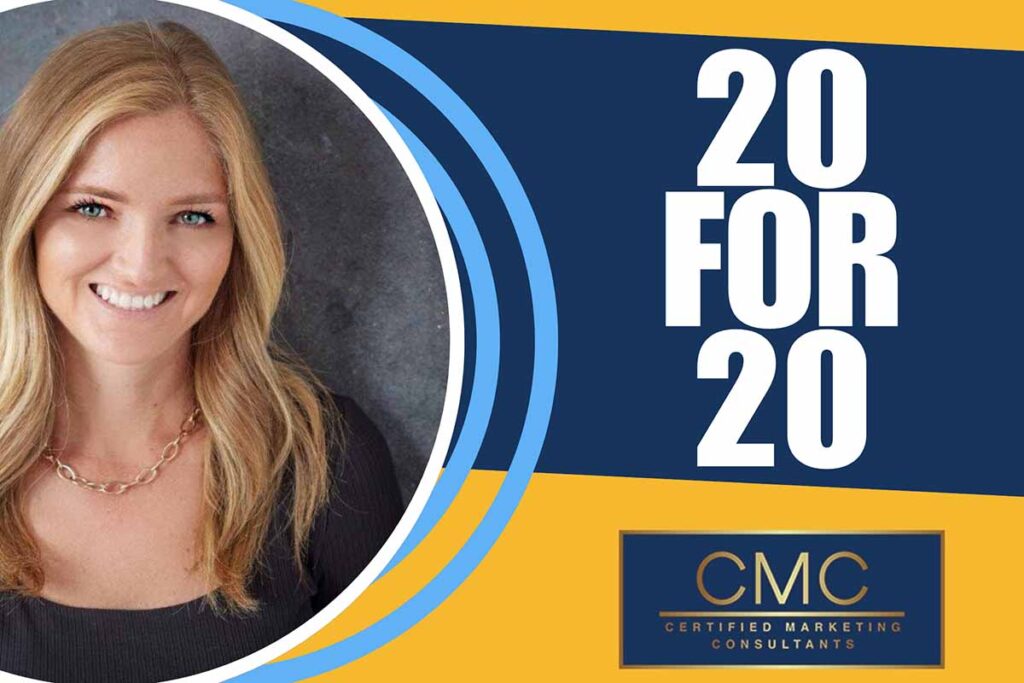
Twenty years in branded merchandise space teaches you a few things.
Some you learn from experience, some you learn from great people, and some you learn because you got something wrong the first time.
This year marks my 20th year in the promotional products industry. Rather than celebrate by looking backward at where I’ve been, I thought it would be more interesting, and probably more useful, to share a few things I’ve learned along the way.
So, in honor of 20 years, here are 20 hot takes about the business, the industry and the people who make it all work.
- “I know a guy” is the unofficial motto of our industry. We’re pathologically incapable of saying, “I can’t.” Impossible deadline? Supply-chain disaster? Need 5,000 of something that doesn’t exist? It’s just another Tuesday in branded merchandise.
- Competing on price is a race to the bottom. And there’s no prize when you get there, unless you count problem clients and past-due receivables.
- Bigger isn’t automatically better. A thoughtfully built $3 million company can be a much better business than a chaotic $15 million one. Bigger is only always better at Costco.
- Good companies give themselves regular physicals. Step out of the day-to-day and systematically check the health of your customers, margins, people, processes and financials.
- How you compensate account managers can make or break the business. There is no one “right” compensation model. There are, however, approximately 13.5 wrong ones. Wield this tool wisely.
- Not all goodwill is created equal. Some goodwill belongs to the company and some walks out the door with the owner. Guess which one buyers prefer.
- Your biggest customer can also be your biggest risk. Landing the whale feels great, until the whale represents 43% of your business and decides to swim away.
- A company can be wildly profitable and still difficult to sell. I learned this one the hard way. Buyers need transferability and predictability, too. Turns out, “But look how much money it makes!” doesn’t solve everything.
- Not all buyers are created equal. Some are creative, decisive and determined to find a path to closing. Others can find a problem for every solution.
- Relationships still matter and matter a lot. Technology has changed how we sell, source, and communicate, but people still buy from people they trust. Twenty years later, I don’t see that changing.
- Very few distributors want to buy decoration. Don’t shoot the messenger. In-house decoration can be profitable and strategically smart, but it also complicates the business model and narrows the buyer pool.
- Revenue isn’t king. I can make any company a $20 million company if you let me sell $20 million worth of product for $19.9 million. Margin matters…maybe someone should put it on a T-shirt.
- You don’t have to be big to operate big. Industry platforms, buying groups, and outsourced labor have given small and mid-sized distributors access to infrastructure, pricing power and resources once reserved for much larger organizations. See #3.
- Everybody loses clients. The buyer leaves, the company gets acquired, or your champion retires. Good companies don’t hold a funeral; they have a repeatable way to replace the business, and hopefully replace it with something better.
- Technology hasn’t made relationships less important, but it has made good relationships more scalable. The best companies use technology to become easier to do business with, not to eliminate the human element that makes this industry work.
- There is no magical “best time” to sell your company. If there were, I’d be significantly less busy answering this question. The right time is a combination of company performance, economic conditions and, most importantly, your goals.
- Company stores are as polarizing as Taylor Swift. You either love them or hate them, but at this point, we can probably all agree they’re not going away.
- Promo people are unusually willing to help their competitors. It’s one of the strangest, and best, quirks of this industry. We’ll fight over the same client on Tuesday and tell each other how to solve a sourcing problem on Wednesday.
- Everybody thinks their company is unique, and they’re right. Just not always for the reasons they think. Owners love the sexy stuff, and buyers have been known to get downright giddy over good margins, customer diversification and a management team that can function without the owner. Turns out boring has excellent resale value.
- Promo people truly care. About the industry, each other, their communities, the environment, and about doing some good along the way. We may argue about company stores, EQP, and rush charges, but when it matters, this industry shows up.
After 20 years, maybe that’s the biggest thing I’ve learned. This is a business built on businesses, but it’s an industry built on people.
I’ve had the privilege of watching companies grow, helping owners understand what they’ve built, guiding people through some incredibly consequential decisions, and watching this industry change in ways none of us could have predicted when I started.
And I’m still learning. Ask me again in 20 years. I’m sure I’ll have another list.
At Certified Marketing Consultants, those two decades of industry experience inform every business valuation, acquisition search and company sale we undertake. Because understanding the numbers matters.
Understanding the business behind them matters even more.